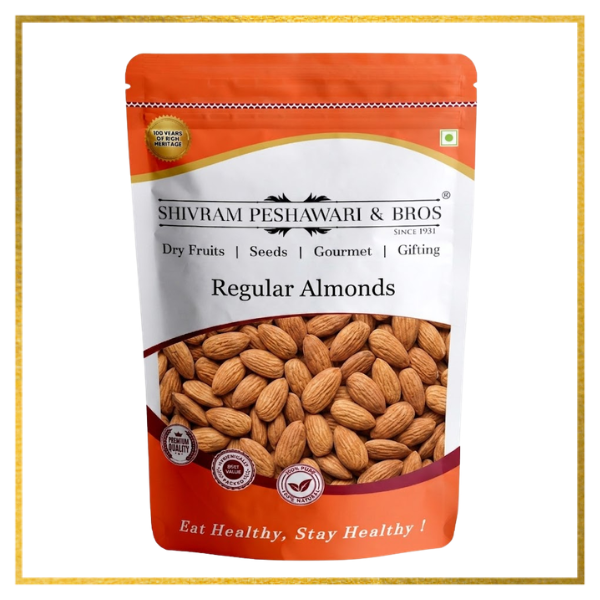
Mamra almonds are a naturally wild-grown variety sourced from the mountain regions of Afghanistan and Iran, prized in India for their high oil content, wrinkled skin, and intense almond flavour. If you have ever wondered why your grandmother insisted on a specific type of badam and refused the ones in supermarket packets, there is a good chance she was asking for these.
What Are Mamra Almonds?
Mamra badam (sometimes spelled "mamri") belong to a distinct variety of almond grown in the wild or semi-wild orchards of Afghanistan and Iran, rather than on irrigated commercial farms. Unlike the uniformly large, flat California almond that dominates Indian retail shelves, Mamra almonds are smaller, oval to irregularly shaped, and deeply wrinkled on the skin. That wrinkled surface is not a defect; it is a marker of natural growing conditions and high essential oil concentration.
They are hand-harvested once a year, which keeps supply limited and quality dependent on seasonal conditions. Because no synthetic irrigation or mass-cultivation techniques are used, each batch varies slightly in size and colour, and that natural inconsistency is part of what distinguishes a genuine Mamra from a lookalike.
Nutritional Profile: What Is Actually Inside a Mamra Almond?
Per 100g, Mamra almonds are broadly similar to other almond varieties in macronutrient composition. They provide roughly 580 to 620 kcal, approximately 50 to 55g of fat (predominantly monounsaturated fatty acids), around 20 to 22g of protein, and 5 to 7g of dietary fibre. Where Mamra almonds are often noted to differ is in their total fat content relative to size. Because the kernels are smaller and denser, the oil-to-kernel ratio is high, which is why a Mamra almond feels distinctly rich when you bite into it.
- Vitamin E: A meaningful source of this fat-soluble antioxidant, which may support skin and cellular health.
- Magnesium: Almonds are a commonly cited dietary source of magnesium, which plays a role in muscle function and energy metabolism.
- Monounsaturated fats: The same type found in olive oil, often associated with heart-supportive diets.
- Protein and fibre: Both contribute to a feeling of satiety, which is why almonds are frequently included in mindful eating routines.
If you are building a broader premium nut habit, it is worth reading about how other nuts like Walnuts: Varieties, Nutrition, Pricing & How to Buy Well in India and Pistachios: Everything You Need to Know Before You Buy compare, since each nut brings a different nutritional emphasis to the table.
Do Mamra Almonds Help with Blood Sugar?
Almonds as a category have a low glycaemic index, and Mamra almonds are no exception. The fibre, protein, and healthy fat in almonds slow the digestion of carbohydrates when eaten alongside a meal, which may help moderate post-meal blood sugar spikes. This is a nutritional mechanism, not a medical treatment. People managing blood sugar through diet often include a small handful of almonds as part of a balanced routine, but almonds should never replace prescribed medical guidance. Consult your doctor if you have specific health conditions.
Why Are Mamra Almonds So Expensive?
The price gap between Mamra almonds and California almonds is real and it is justified by several factors:
- Low yield per tree: Wild or semi-wild Afghan and Iranian almond trees produce far less fruit per season than cultivated California varieties.
- Hand-harvesting: There is no mechanised harvesting. Every kernel is picked by hand, which raises labour cost significantly.
- Single annual harvest: Supply is fixed each year with no second crop to compensate for a poor season.
- Import and logistics: Sourcing from Afghanistan and Iran involves longer supply chains and import handling, which adds to the final cost.
In India, genuine Mamra almonds typically retail between roughly ₹1,200 and ₹2,000 per kg depending on grade, origin, and seller. Prices at the lower end of that range often signal mixed quality or a blend with cheaper varieties. At a trusted specialist store, you are paying for verified sourcing, not just the nut itself.
How to Identify Genuine Mamra Almonds
This is where most buyers get confused, and where most sellers fail to help. Here is what to actually look for:
- Shape: Genuine Mamra almonds are smaller than California almonds and irregular in shape. Uniform sizing is a red flag.
- Skin texture: The skin should be wrinkled and thin, not smooth and papery. Run your finger across the surface; it should feel slightly crinkled.
- Oil residue: When you press a Mamra almond between your fingers, it may leave a faint oily trace. This reflects the natural fat density of the kernel.
- Taste: The flavour is rich, slightly sweet, and notably more intense than a California almond. If the taste is flat or bland, the variety is likely not genuine Mamra.
- Colour: The kernel inside should be white to cream. A very pale, almost white skin on the outside combined with perfect uniformity usually points to a different variety.
Always buy from a seller who can clearly state the origin and grade. Vague labelling like "premium almonds" without specifying variety is a reason to ask more questions.
Recommended for you
-
 Jumbo Mamra Almonds
 — naturally sweet, high-oil, hand-selected for quality.
-
 Mamra Almonds
 — the classic wrinkled variety prized for flavour and freshness.
-
 Gemini Dry Fruits Gift Box - 600 Grams (100 Grams each of Almonds,Cashew,Raisins,Pistas, Apricots & Dates)
Gemini Gift Box — 600g premium assorted dry fruits, ready for gifting occasions.
How Many Mamra Almonds Should You Eat Per Day?
A commonly recommended daily portion for almonds is around 10 to 15 kernels, which works out to roughly 20 to 25g. For Mamra almonds, whose kernels are smaller and denser, 10 almonds is a reasonable and satisfying daily amount for most adults.
Soaked vs raw: Soaking Mamra almonds overnight in water softens the skin and may make them easier to digest. Many people peel the skin after soaking, which removes tannins present in the outer layer. Soaked almonds are a traditional morning habit in Indian households and work well as a first thing to eat, before or alongside breakfast.
Raw and unroasted: Mamra almonds are best consumed raw or lightly soaked. High-heat roasting can diminish the delicate oils that make them distinctive. Avoid versions that are salted or flavoured, as these mask the natural quality.
Best time: Morning consumption on an empty stomach or as a mid-morning snack is the most common practice. Including them in a small trail mix alongside seeds or dried fruit also works well throughout the day.
If you are exploring what else to add to a daily dry fruit habit, our guides on Benefits of Eating Dates Daily: What Happens When You Make It a Habit and Watermelon Seeds: What They Are, How to Eat Them, and Why They Belong in Your Pantry cover other additions worth considering.
Are Mamra Almonds Better Than California Almonds?
"Better" depends on what you are looking for. California almonds are larger, milder in flavour, and more affordable. They are a reliable everyday nut for cooking, baking, and general snacking. Mamra almonds are smaller, more intensely flavoured, denser in natural oils, and traditionally prized in Indian households for their richness. If you are using almonds primarily as a flavour ingredient in mithai or kheer, California almonds work fine. If you are eating them whole for daily nourishment or gifting them to someone who would notice the difference, Mamra almonds are the more considered choice. The two are not competing; they serve slightly different purposes.
For a broader look at how premium nuts compare across the category, the Exotic Nuts Guide: Uses, Taste, and Nutrition You Should Know is a useful read.
Mamra Almonds for Gifting: Diwali, Eid, and Weddings
In Indian gifting culture, dry fruits carry a significance that goes beyond their nutritional value. Presenting someone with a box of Mamra almonds signals that you chose something genuinely premium, not just a supermarket assortment. This is particularly relevant during Diwali, Eid, and wedding season, when the quality of a dry fruit gift is noticed and remembered.
Mamra almonds pair exceptionally well in curated gift boxes alongside Medjool dates, pistachios, and mixed berries for a balanced, visually appealing assortment. If you are planning festive gifting this season, our guides on What to Gift for Diwali: A Complete Dry Fruits Guide (2026) and Best Dry Fruit Gift Boxes for Diwali 2026: A Buyer's Guide by Shivram Peshawari & Bros walk through how to build a gift box that actually impresses.
Where to Buy Mamra Almonds in Hyderabad and Across India
At Shivram Peshawari & Bros, we have been sourcing and selling premium dry fruits from Mozzamjahi Market in Hyderabad since 1931. Our Mamra almonds are handpicked, hygienically packed, and 100% pure and natural, with no ambiguity on sourcing quality. When you buy from a 90-plus year old specialist rather than a generic retailer, you are buying from someone who has been selecting this variety long enough to know exactly what genuine looks like.
We offer same-day delivery within Hyderabad, and ship across India with flat ₹100 shipping on orders below ₹3,000. For gifting, we have three packaging formats: reusable plastic or metal boxes, designer cardboard boxes, and fully customised gift boxes, so there is an option for every budget and occasion.
Whether you need a small personal pack for daily use or a bulk order for corporate gifting, you will find Mamra almonds as part of our broader premium nuts catalog alongside cashews, pistachios, and a full range of specialty dry fruits, seeds, and spices.
Frequently Asked Questions
What are Mamra almonds and where do they come from?
Mamra almonds are a wild or semi-wild variety of almond grown in the mountain regions of Afghanistan and Iran. They are smaller and more irregularly shaped than California almonds, with a wrinkled skin and a higher concentration of natural oils.
How many Mamra almonds should I eat in a day?
Around 10 to 15 Mamra almond kernels per day is a reasonable portion for most adults, roughly equivalent to 20 to 25g. Many people eat them soaked in water overnight, which softens the skin and may aid digestion.
Why are Mamra almonds more expensive than regular almonds?
Mamra almonds come from low-yield wild trees, are hand-harvested once a year, and are imported from Afghanistan or Iran. Each of these factors limits supply and raises cost, which is why genuine Mamra almonds typically retail between ₹1,200 and ₹2,000 per kg in India.
How do I know if the Mamra almonds I am buying are genuine?
Look for small, irregular kernels with wrinkled, thin skin. Genuine Mamra almonds leave a faint oily trace when pressed and taste noticeably richer and more intense than California almonds. Uniform sizing and a bland taste are common signs of a substituted variety.
Are Mamra almonds better for blood sugar than other almonds?
Almonds as a category have a low glycaemic index, and Mamra almonds share that characteristic. The fibre, protein, and healthy fats they contain may help slow digestion of carbohydrates when eaten with a meal, which could moderate post-meal blood sugar levels. This is not a substitute for medical advice.
Should I eat Mamra almonds soaked or raw?
Both are fine, though soaking overnight is a traditional Indian practice that softens the skin and may make the almonds easier on digestion. Raw, unroasted Mamra almonds retain their natural oils best, so avoid high-heat roasting or heavily processed versions.
Can I order Mamra almonds online from Shivram Peshawari & Bros?
Yes. Shivram Peshawari & Bros ships across India with flat ₹100 shipping on orders below ₹3,000, and offers same-day delivery within Hyderabad. Orders are processed within 1 to 2 business days, with delivery times of 2 to 4 business days for metro cities and 4 to 7 business days for other cities.
Are Mamra almonds good for Diwali gifting?
Yes, Mamra almonds are considered a premium choice for festive gifting because of their rarity and flavour intensity. They work well in curated dry fruit boxes alongside dates, pistachios, and mixed berries, and are available in multiple gift packaging formats at Shivram Peshawari & Bros.